

I grew up in China, studied Architecture in Zhejiang and Michigan, pivoted to HCI, co-founded a startup, contracted across industries, worked as an in-house product designer, and eventually landed in Vancouver. The long way around — but each move taught me how differently people can understand the same problem.
I'm drawn to work where the problem is real and the answer isn't obvious. I've done that with clients, inside product teams, and now through an early product I'm building on the side.
Different settings, but I tend to do the same thing: talk to people, figure out what's actually going on, and turn it into something clearer and usable.
Outside of work, I play flute, make 3D prints, hike when things get noisy, and often find myself learning a new language or disappearing into a piece of history I knew nothing about last week.
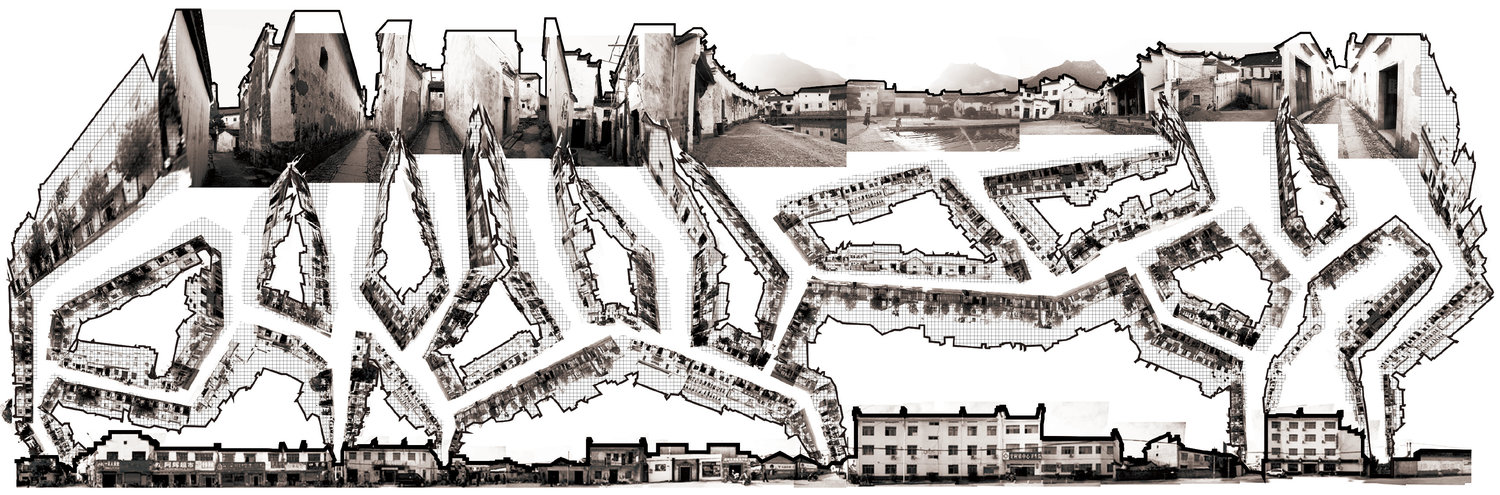
I seeked inspiration by representing how the ancient town is perceived.
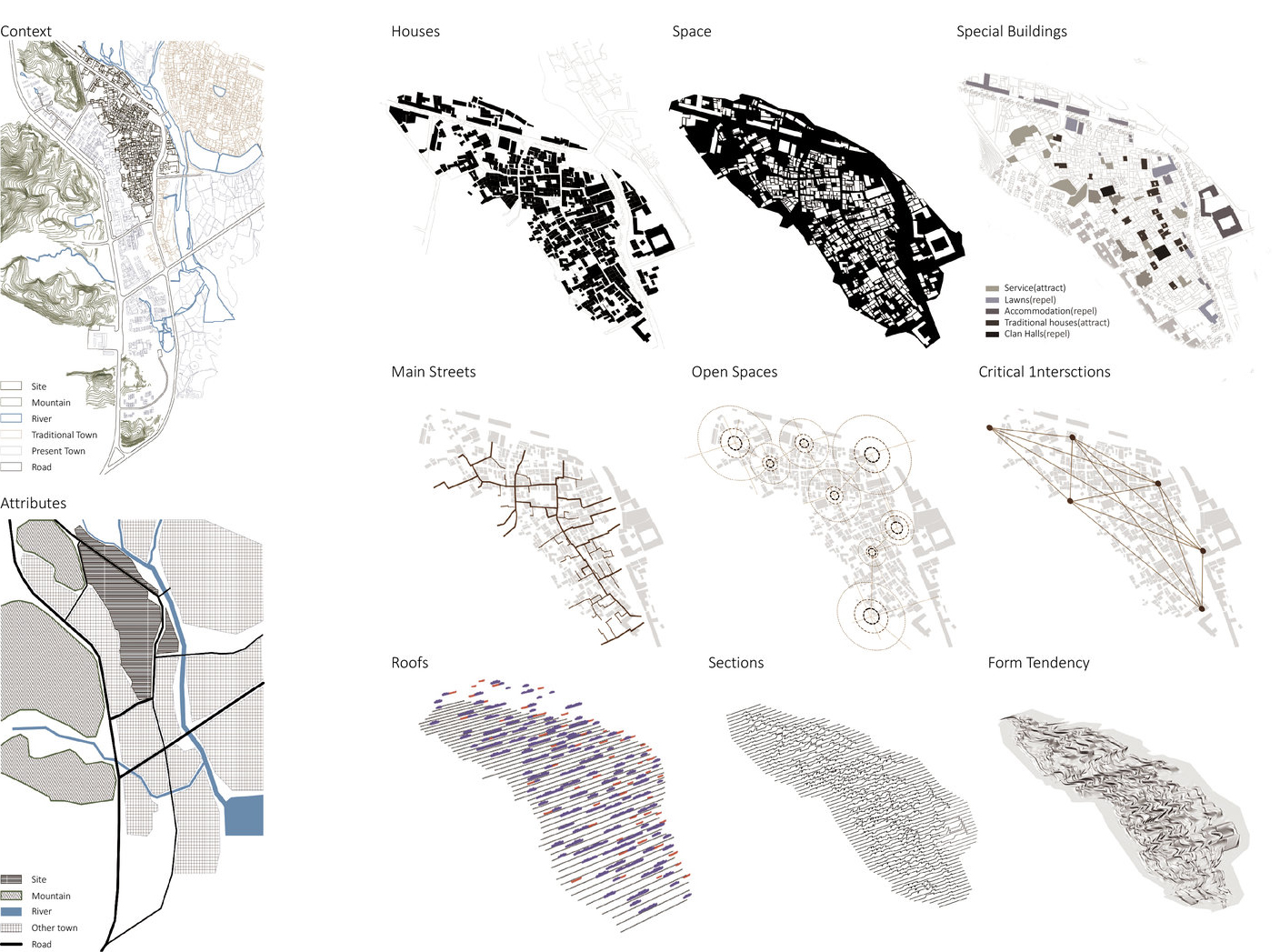
I diagrammed the map differently to identify constraints and define opportunities.
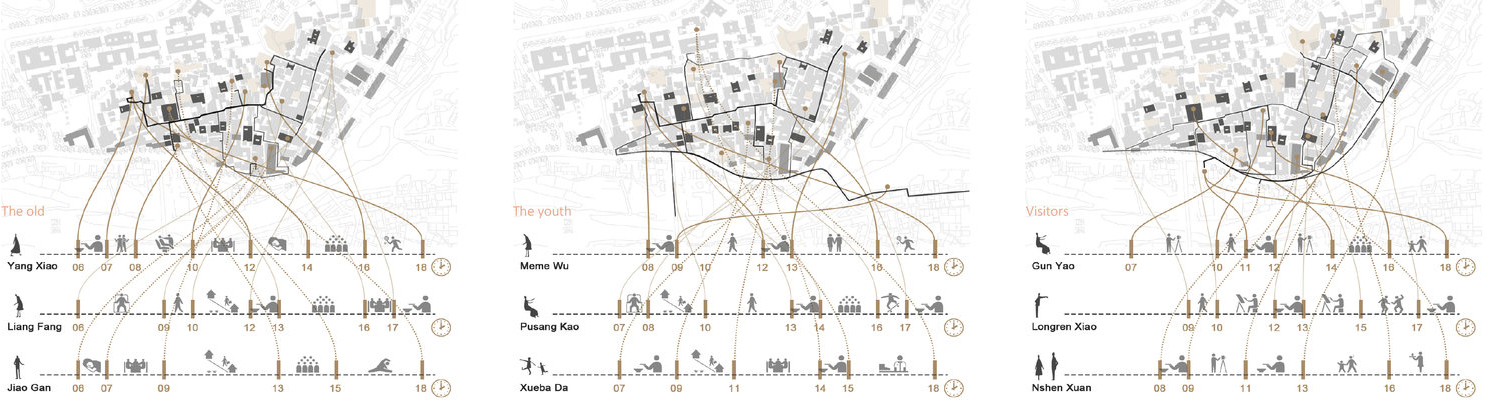
Through research on the locals and travelers, I diagrammed their activity patterns to further seek design opportunities.

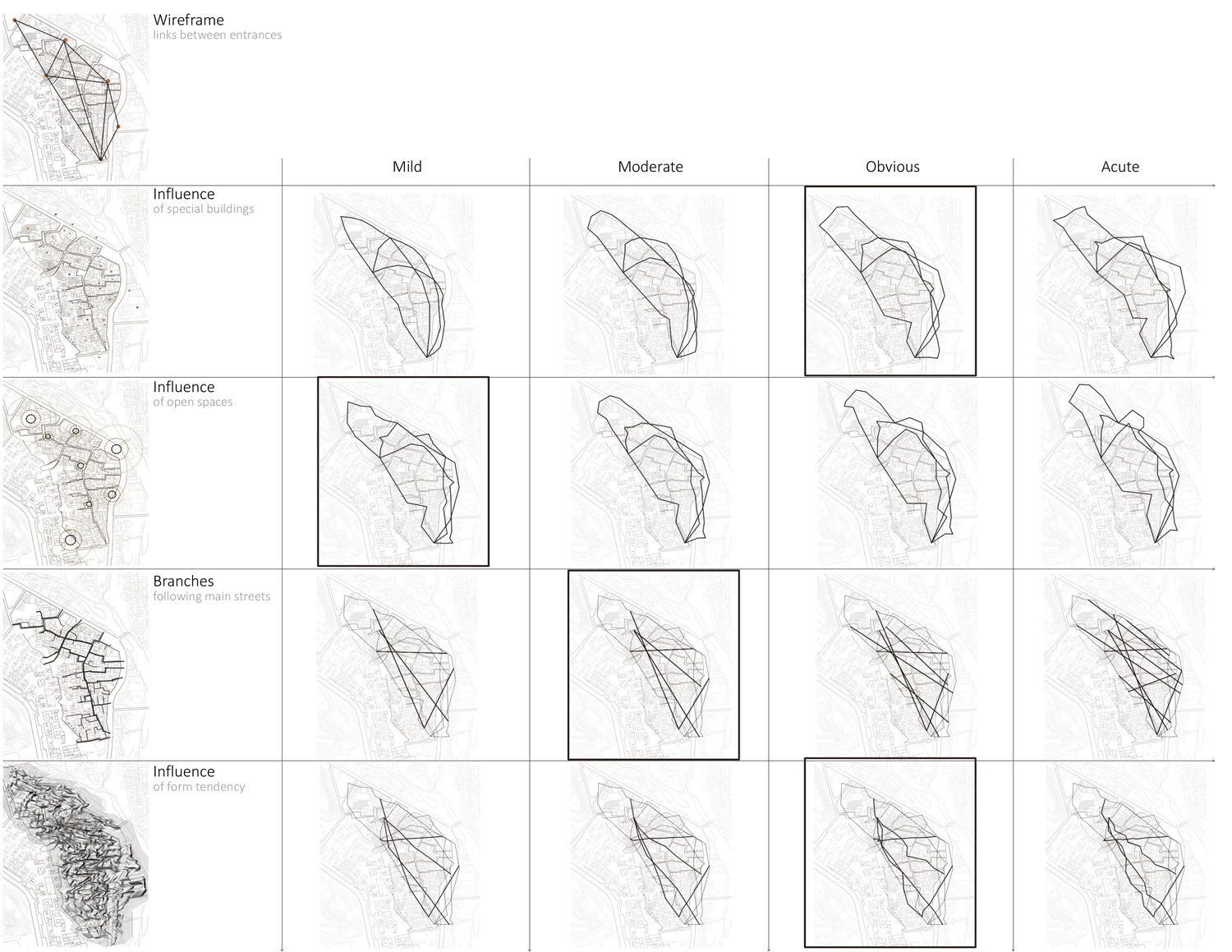
I coded to generate the design for a skywalk route, and I iterated to find the optimal set of parameters.
I diagrammed to inspect all types of spaces to scrutinize the experience of people inside or nearby.
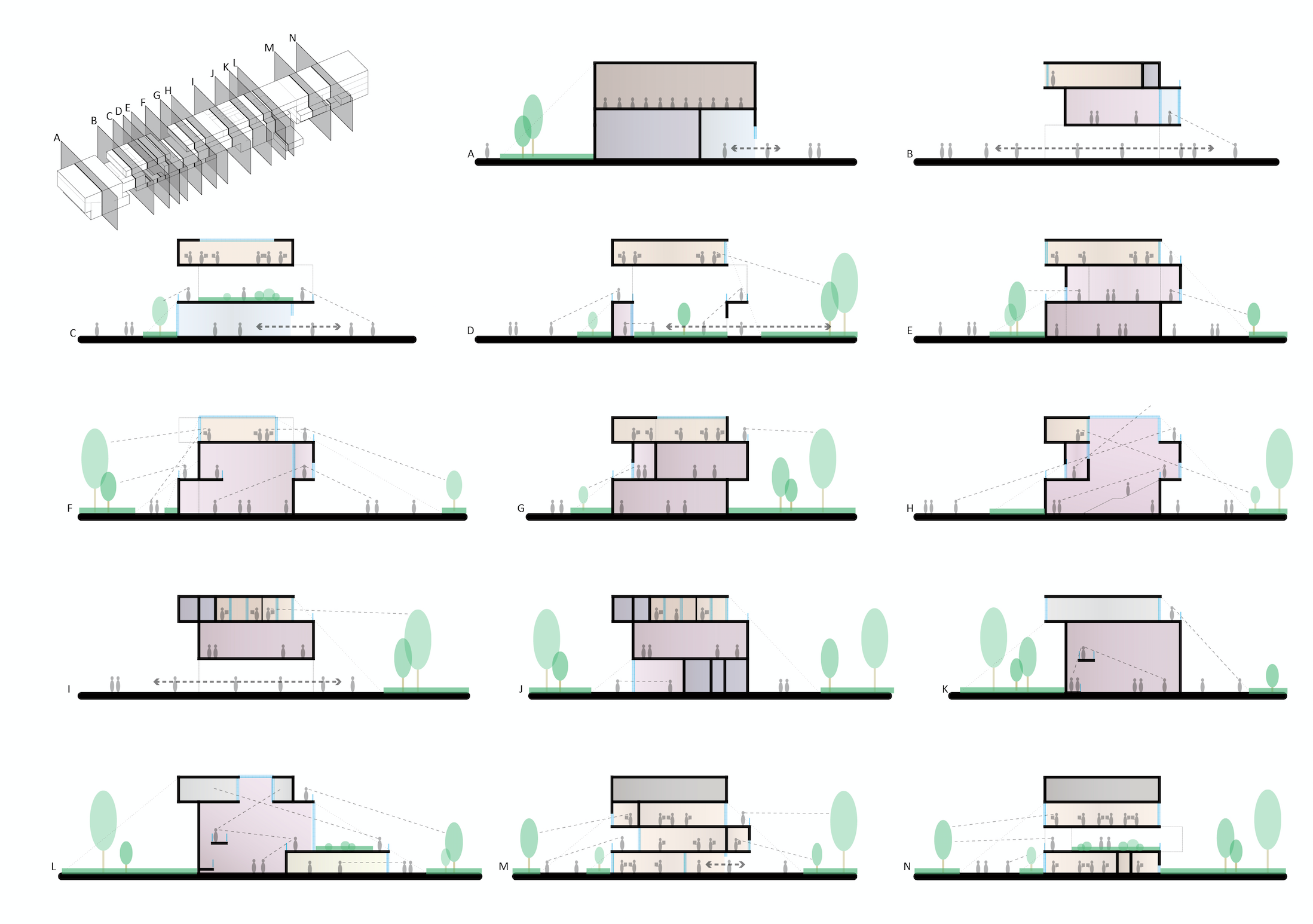
I created this diagram to efficiently inspect user flow, plan, space, and light design simultaneously for potentials of optimization.
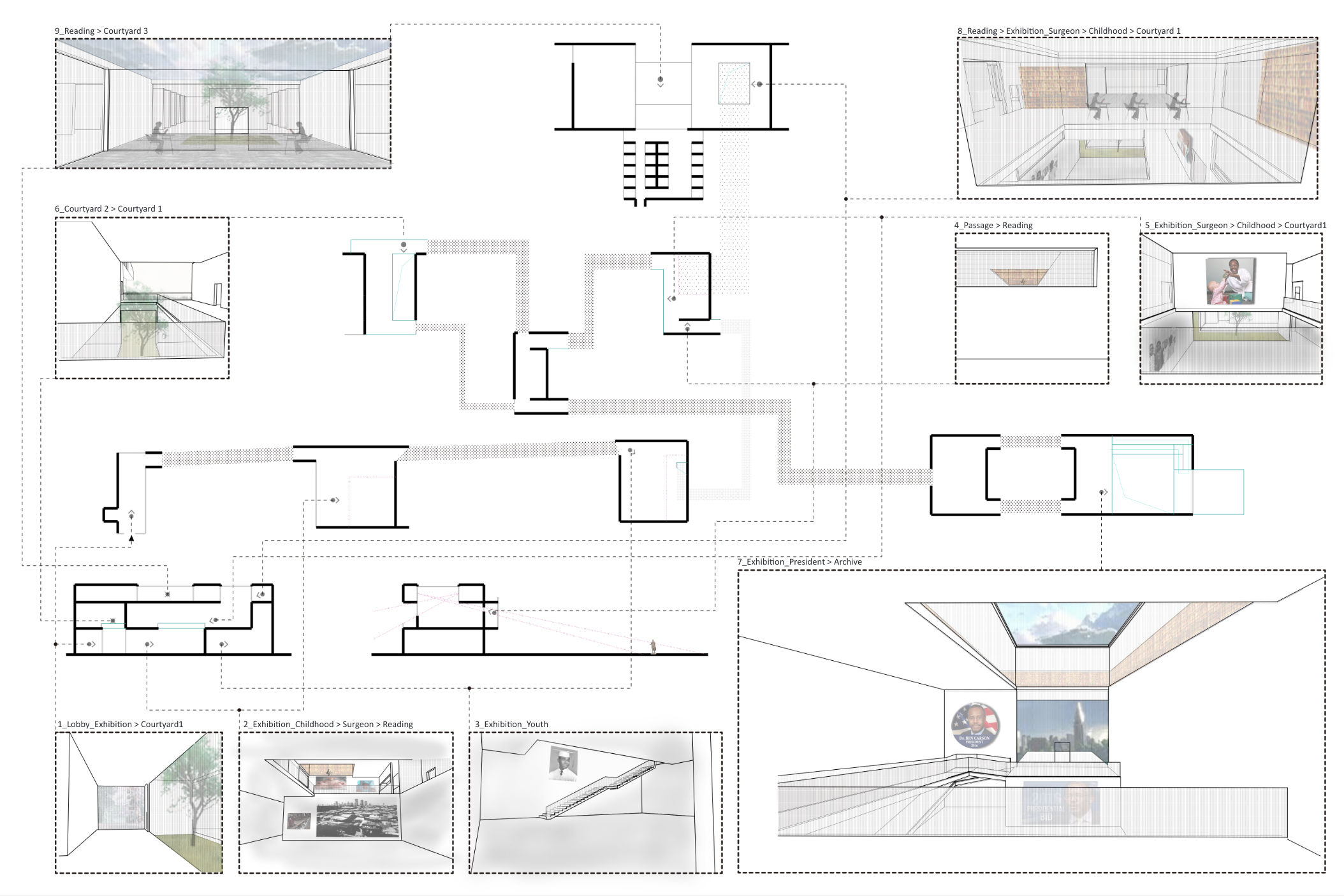
I began with the questions: Where can we live after a nuclear apocalypse? How will we make use of the substances?
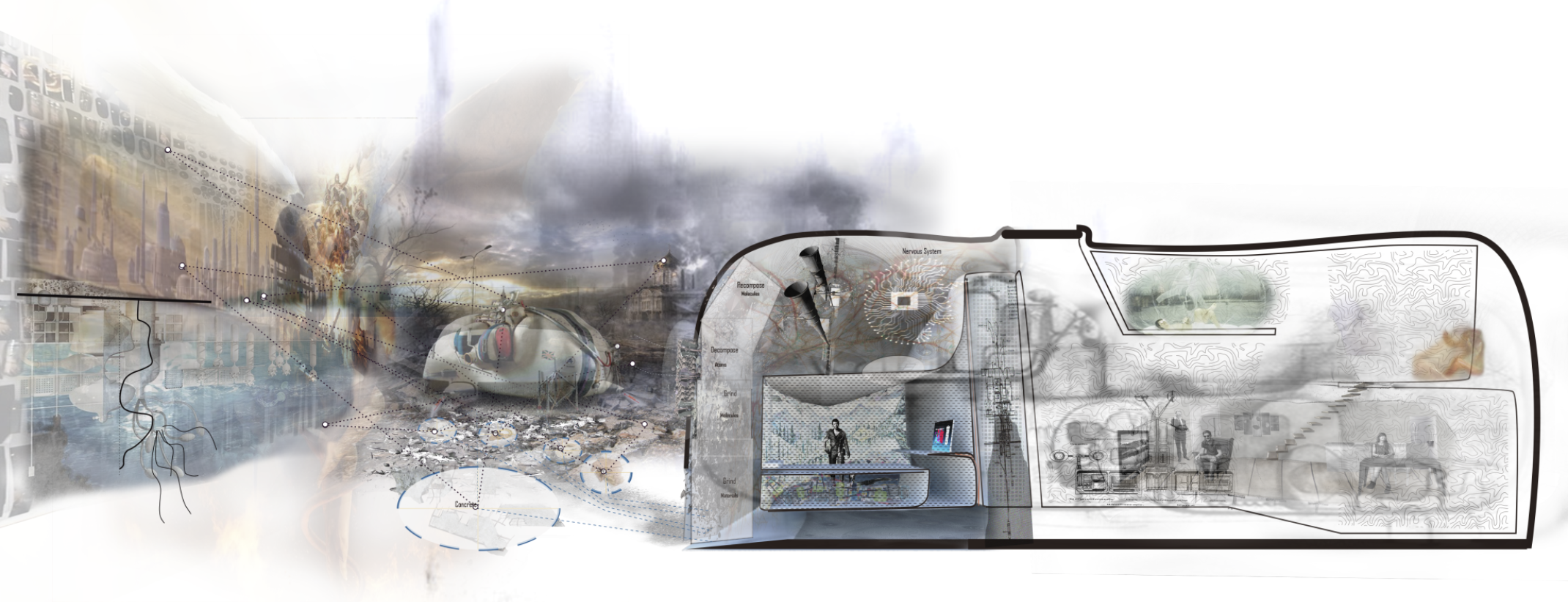
We can live in a shelter that simulates any environment we want! The shelter can "eat" post-war debris to convert substances.
I tried to envision the whole manufacture system before the Doomsday with this diagram.
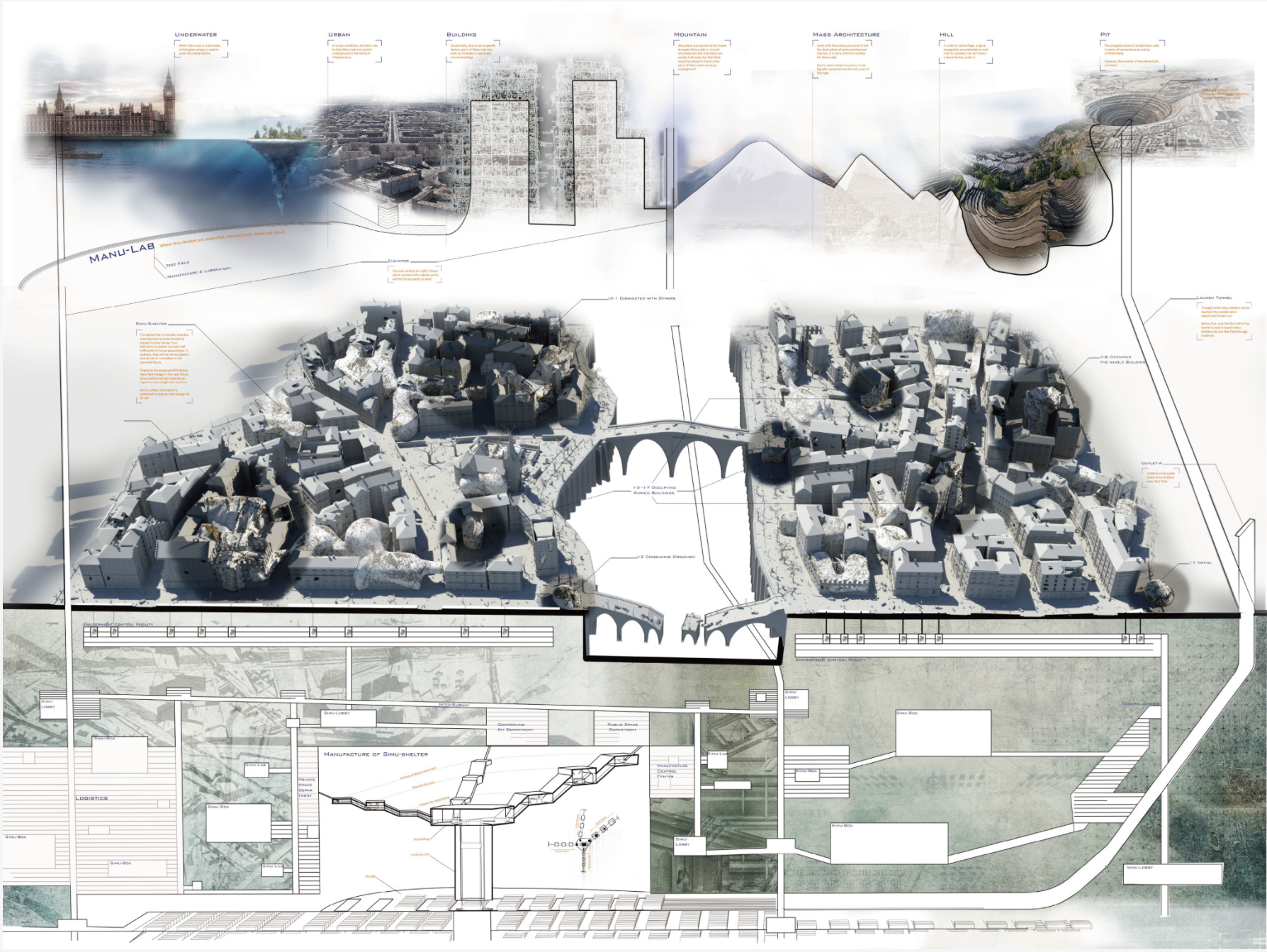
We start to do research and experiments, and finally manufacture them. Everything happens in secret under any kind of location. The chosen ones get onboard when The Disaster happens. The shelters get launched and distributed on the surface afterward.
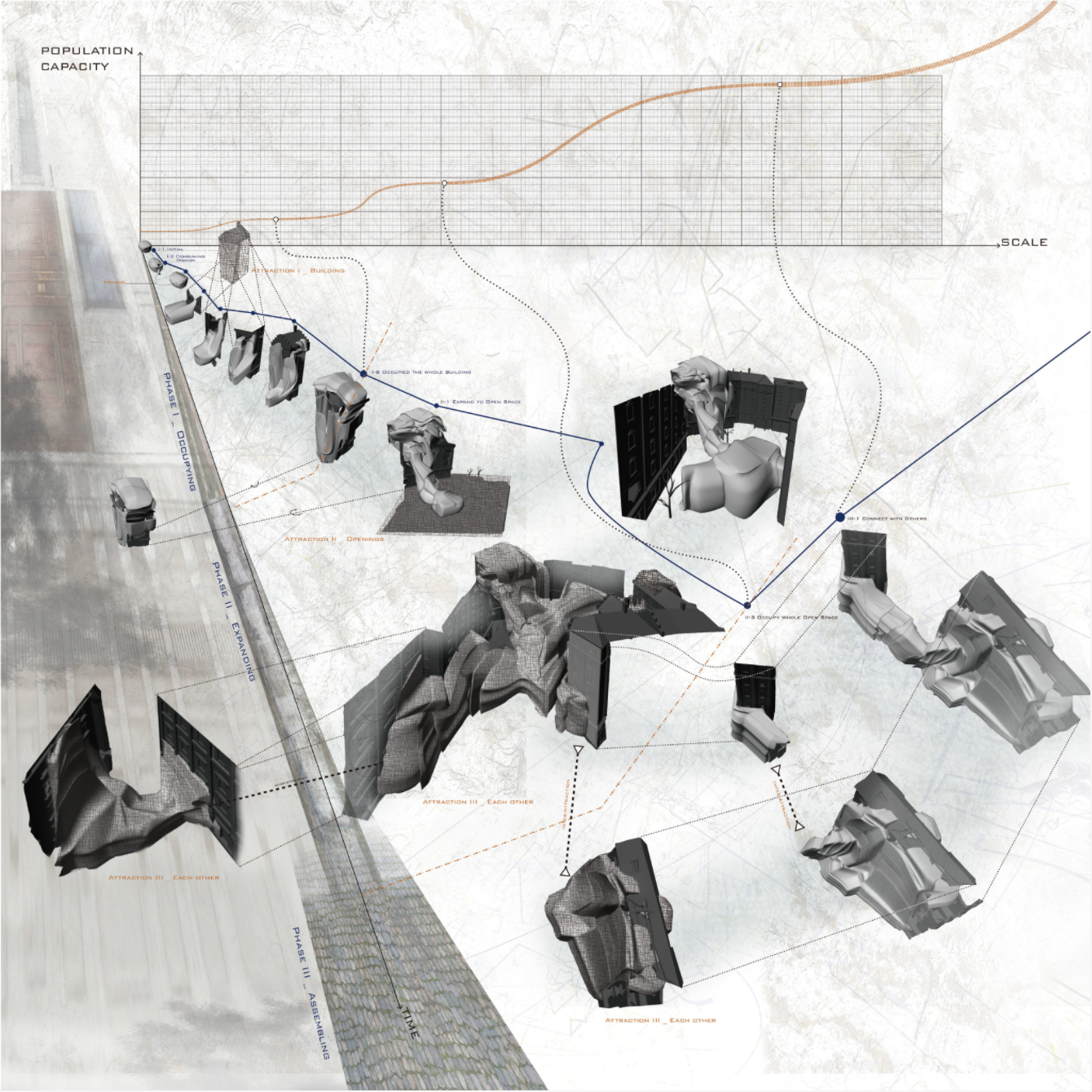
I mapped out the process of how a Simu-shelter "grows".
I created this Anatomy Diagram to design the Shelter system in more detail.
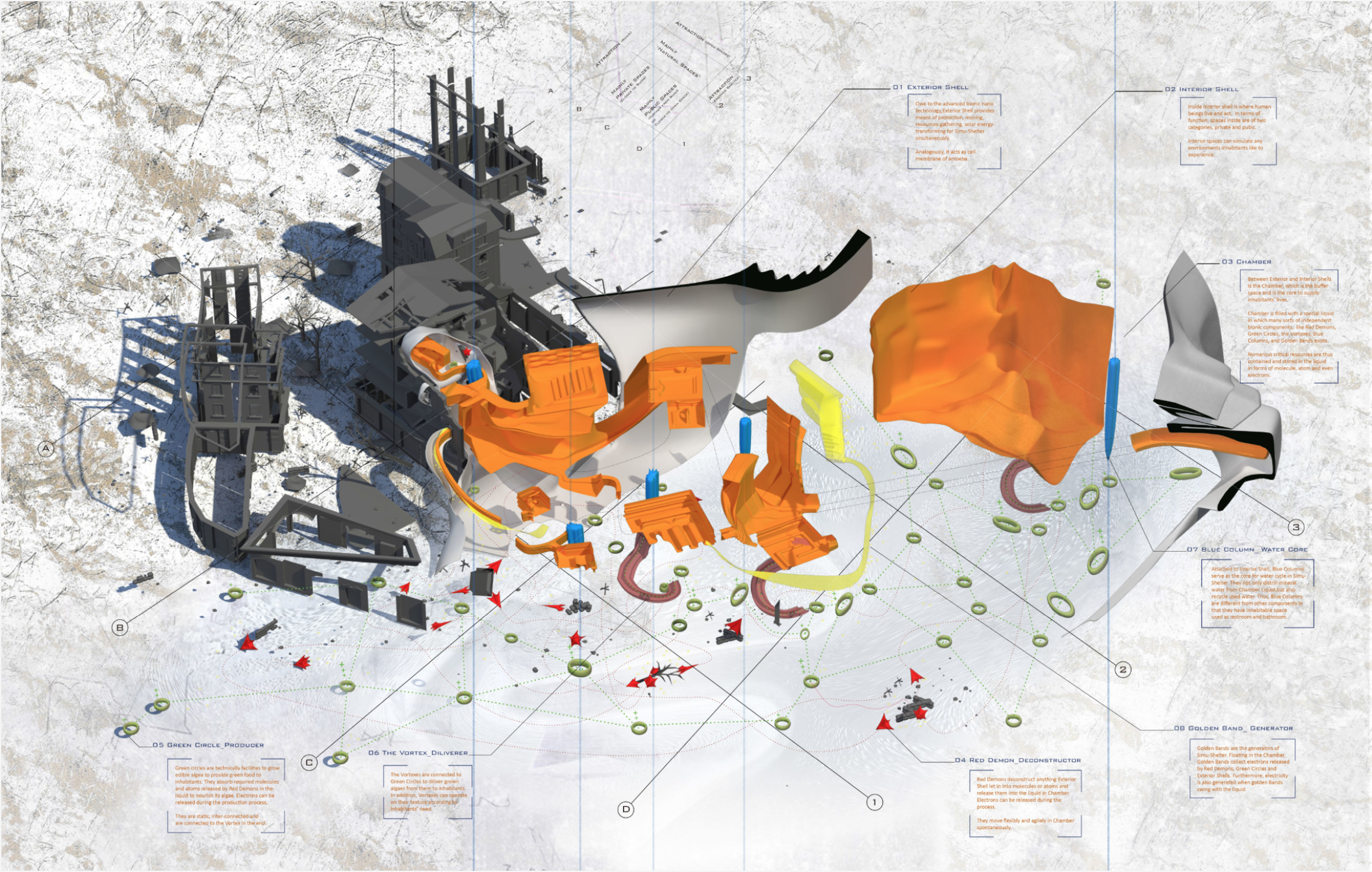
Aside from the cavities for human-beings, it also has different mitochondria-ish robots helping with substance-conversion and energy-transition.
I illustrated how residents reside in the Simu-shelter in an abstract manner.
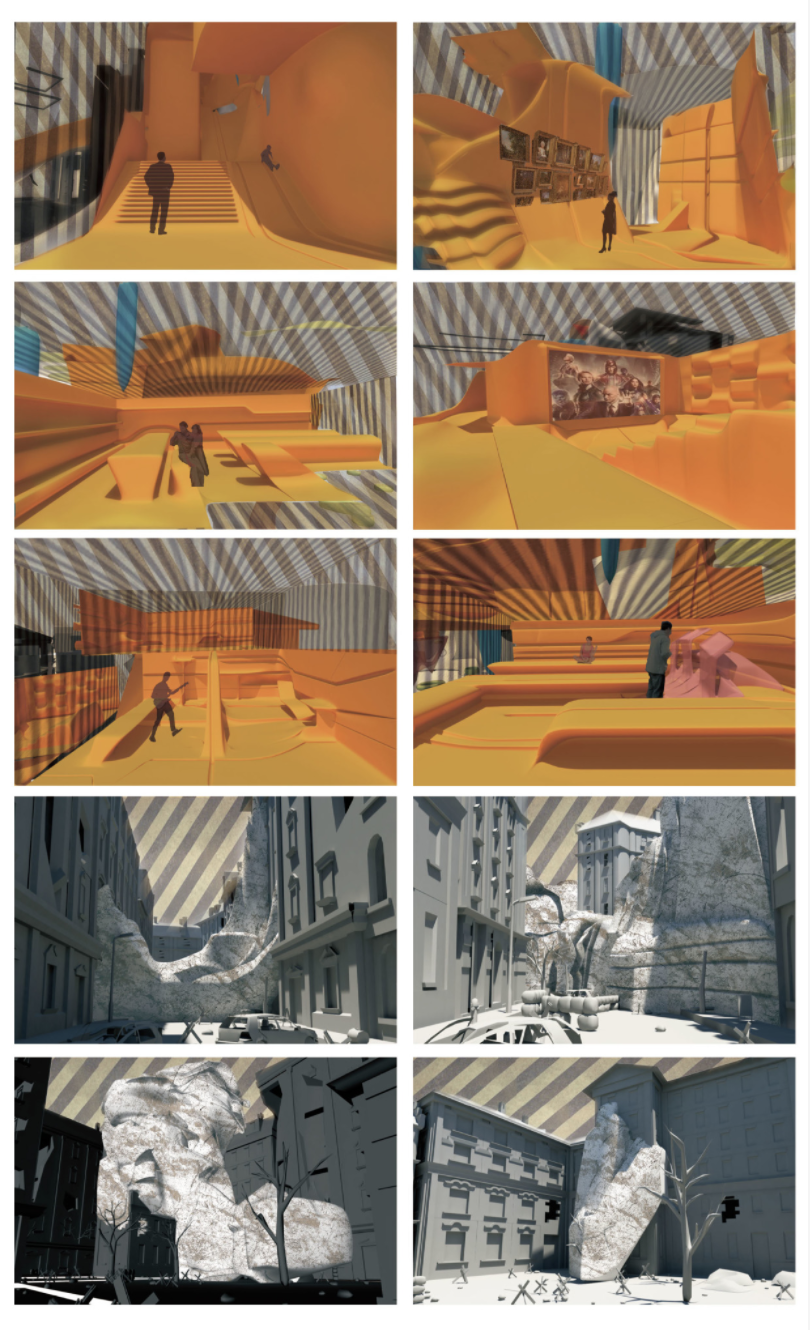
You are right, it looks so unreal! But that's the point of a Fantasy, isn't it? ;D
By defining each interaction, I designed and implemented this program to express fantastic momentaneous effects with simple interactions.
Once upon a time in the world, Space Shuttles indicated our bright future as a civilization. How far have they traveled?
It's long... I know... feel FREE to drag the video to the end :) R.I.P, all staff members on Columbia and Challenger...
From a real dataset we visualized for the client, I replaced the real data with the fake, and showcased the data-vis process in the tutorial.
This visualizes the results of the 2017-2018 Men's NCAA Basketball Tournament where UMich ranked the 2nd! It has information encoded in a 3D immersive space, which can be fun and cool.
BUT it does not make much sense for now in terms of efficiency... I mean, at least we should be able to shoot a basketball in it, right? :D